Automation and Infrastructure Projects for Real-World Systems
This page presents real projects where network infrastructure, control panels, building automation and custom equipment were brought together into functional, testable systems that are easier to understand and maintain.
Projects across 3 directions: Technical Infrastructure • Building Automation • Custom Equipment
They are not presented as finished products or inflated case studies. Each project shows a real working stage: what needed to be organised, connected, controlled or tested, and what became clearer before the next step.
Network infrastructure, structured cabling and server rack
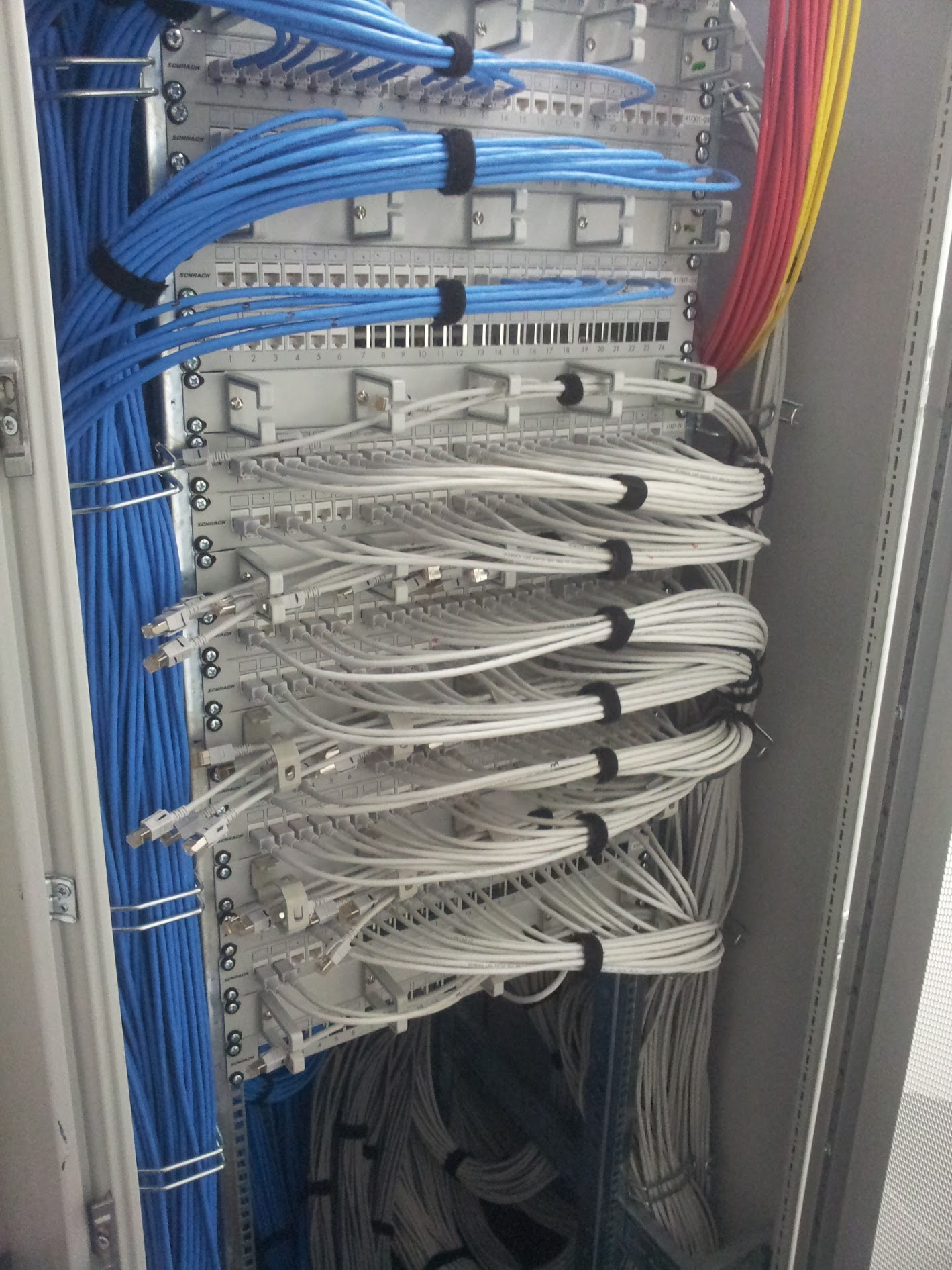
Physical network and IT infrastructure implementation: cable routes, patch panels, rack organisation and preparation of connections for a company’s equipment.
The goal was not simply to connect network outlets, but to create a structure that can be traced, maintained and extended more easily. Cables, connections and equipment were arranged so that later work does not depend on improvisation.
Patch panels, cable routes and connection management inside a technical rack.
What the work included
terminating and organising data cables in patch panels;
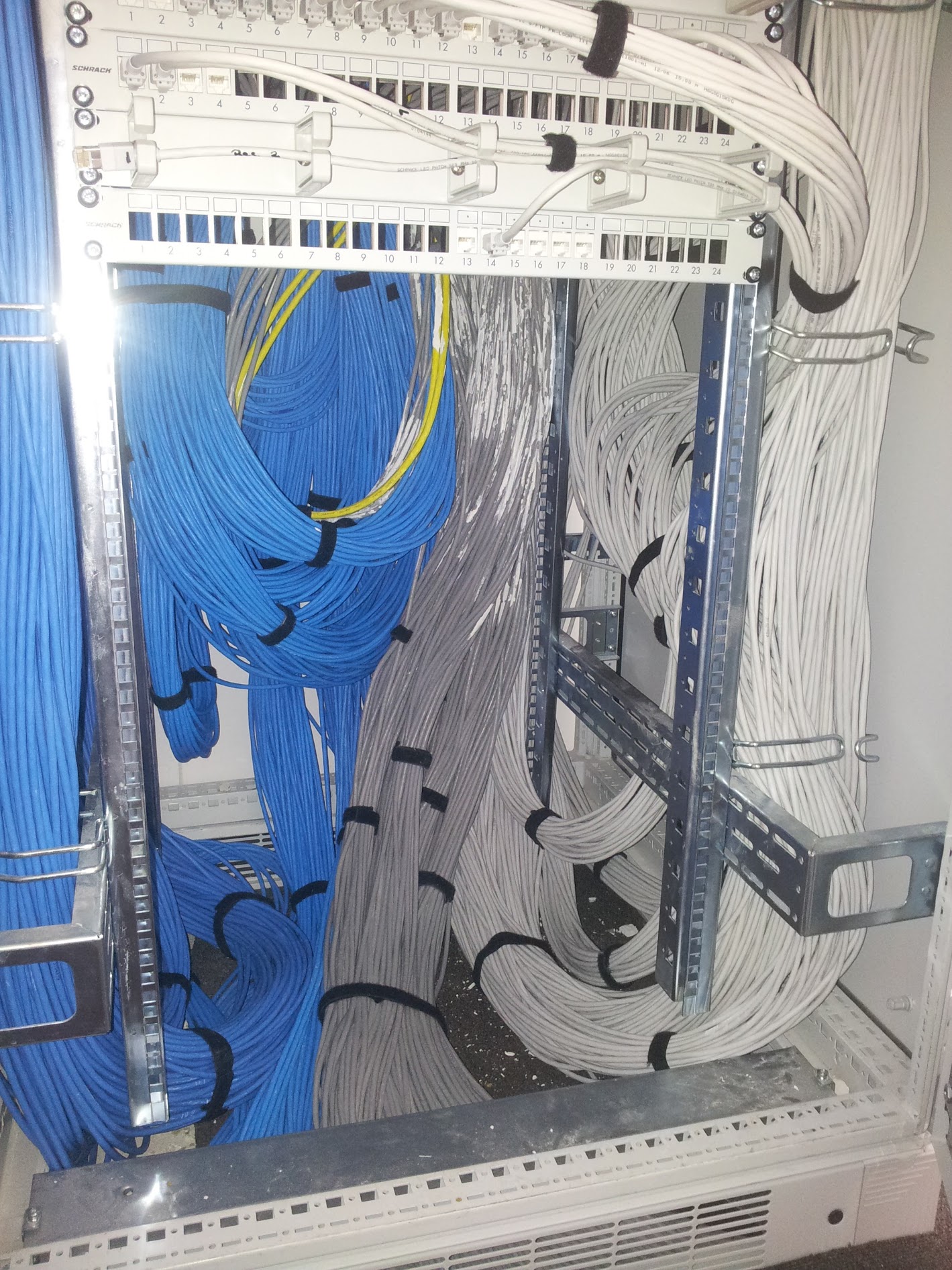
separating and grouping cable routes for easier access and service work;
organising rack cabling with controlled service loops and suitable fixings;
preparing connections for network equipment, servers and workstations;
clearer labelling and structure for identifying connections;
a healthier physical foundation for future expansion and maintenance.
Organisation and maintenance
Infrastructure that can be traced and extended
Good cabling is not only about having a network that works on installation day. It also means having order inside the rack, access to cable routes, logical separation and enough room for changes, new equipment or troubleshooting.
Separated cable routes and organised service loops for access, service and expansion.
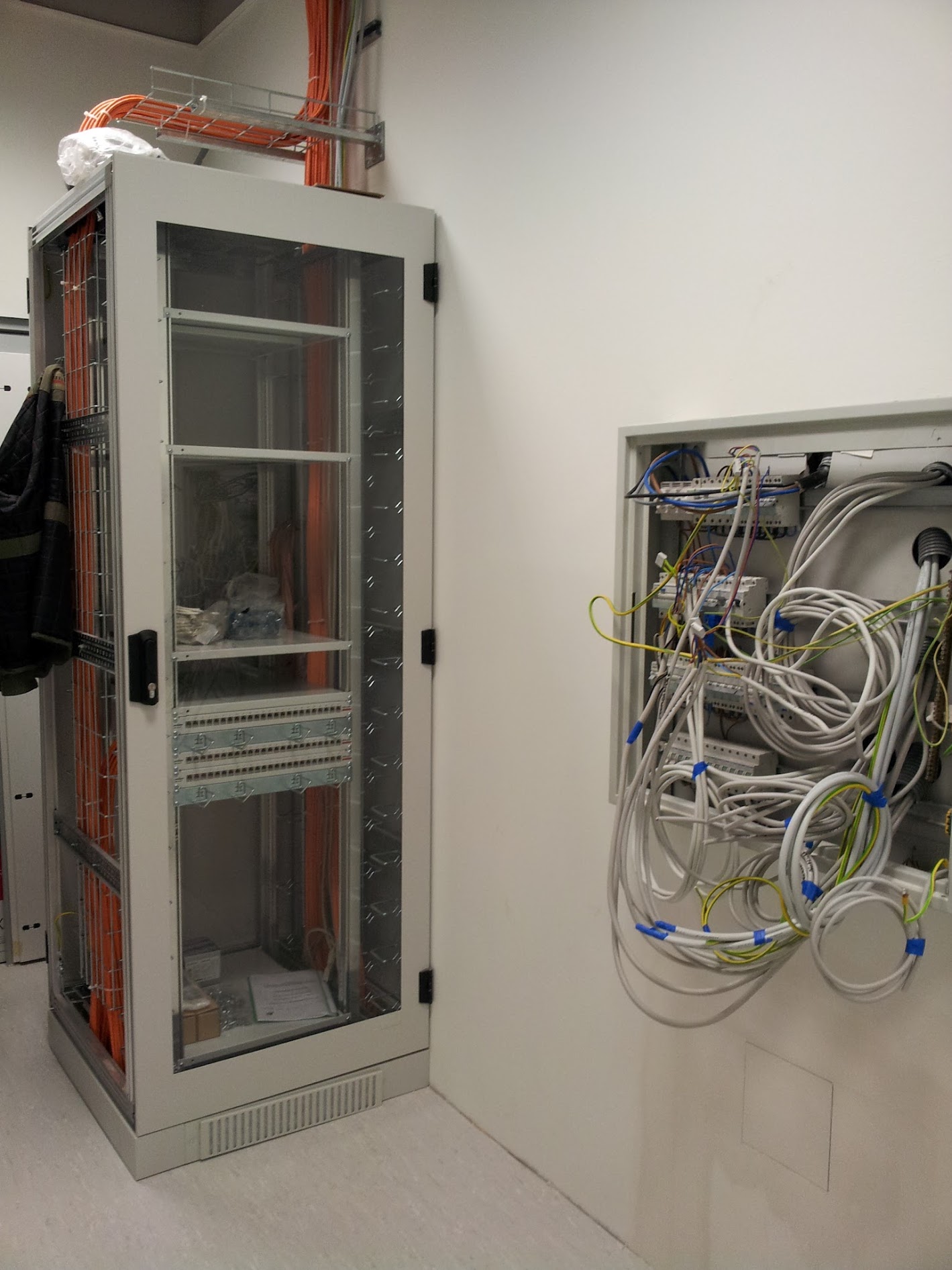
Integration of the network rack with the building’s wider technical infrastructure.
Status: practical implementation of network infrastructure and physical organisation for IT systems and connectivity in a business environment.
Project 02 · Smart Home · Building Automation · Loxone
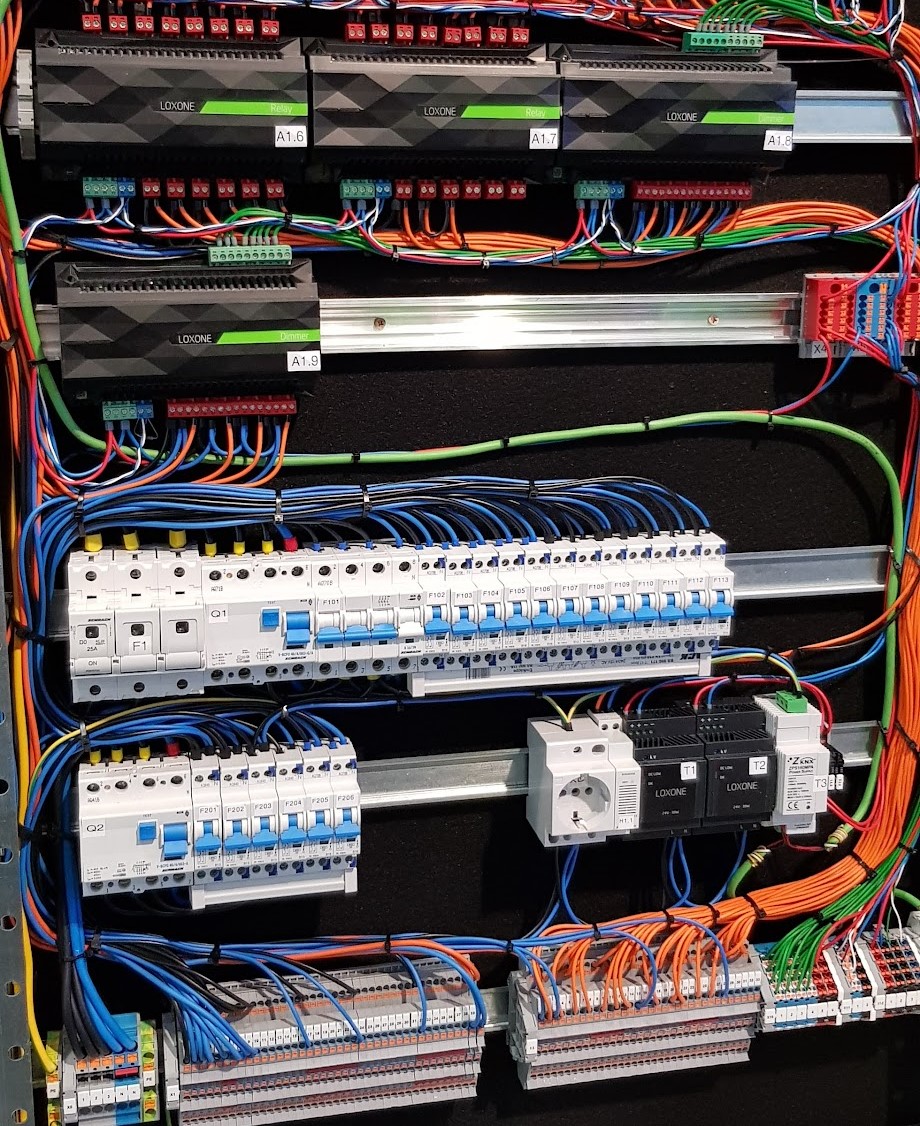
Smart home automation panel with Loxone modules
Integration of a building automation installation in an organised electrical panel with control modules, protection devices, power circuits and signal connections.
The project focused on creating a clear physical foundation for automation: protection devices, power distribution, relays, dimmers, inputs and outputs, all arranged in a structure that can be configured and maintained more easily.
Control panel with Loxone modules, protection circuits and organised signal wiring.
What was integrated
Loxone modules for control and automation;
relay and dimmer modules for controlled circuits;
electrical protection devices and organised distribution inside the panel;
terminal blocks, signal circuits and connections to the building installation;
logical separation of power, control and signal components;
a structure ready for configuration, scenarios and later expansion.
Automation in the field
From the electrical panel to building functions
A smart home system becomes useful when the control layer is connected in an orderly way to the real installation. The panel acts as a central point for circuits, modules and connections, while automation logic can be adjusted later without rebuilding the installation from scratch.
Status: practical building-automation integration, focused on organisation, wiring, control and a clear foundation for later configuration.
Custom 3D printer with laser, CNC and a four-motor Z axis
A custom platform built as a 3D printer and extended for use with a laser module and CNC. The project combined mechanics, control electronics, firmware and motion testing.
An important part of the implementation was configuring and adapting firmware for a BigTreeTech control board so that axis movements and machine functions could be tested on one platform.
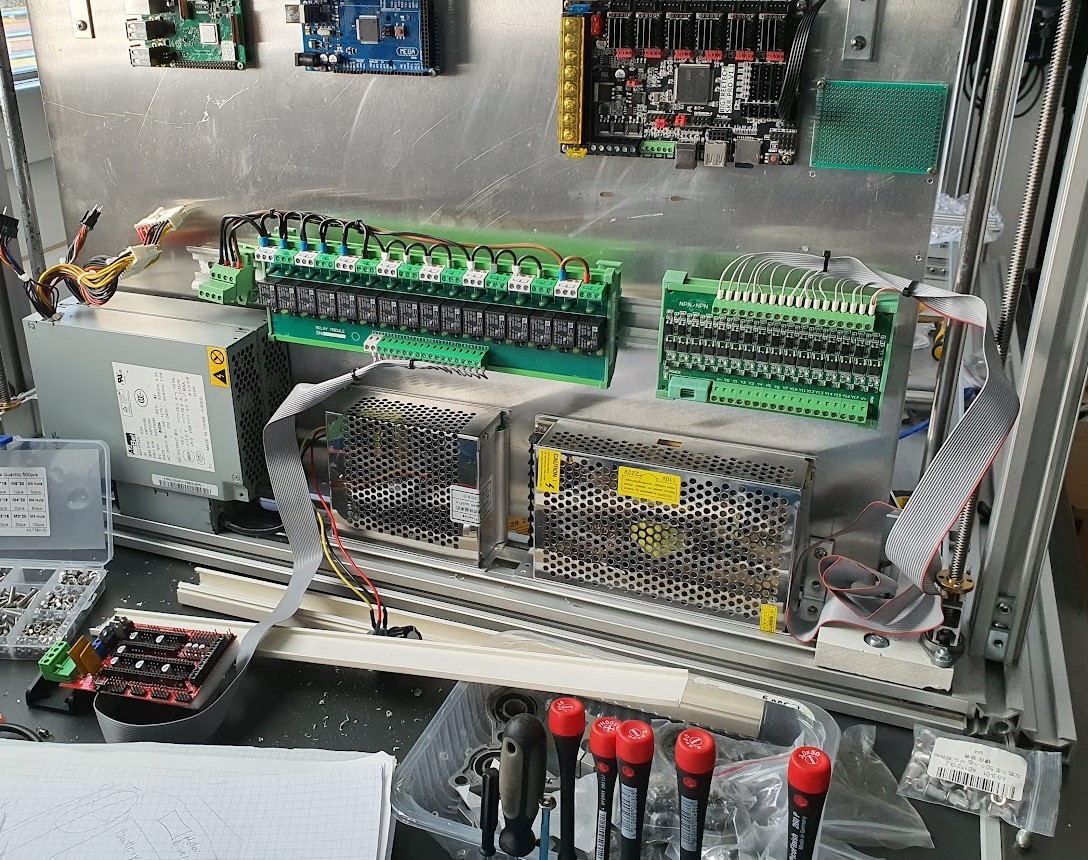
Control electronics and modules for the custom 3D printing, laser and CNC platform.
Key implementation areas
configuring a working platform for 3D printing, laser and CNC;
integrating control electronics and power supplies;
configuring and adapting firmware for the BigTreeTech controller;
coordinating four motors for the Z axis, which raises and lowers the worktable;
testing motion before using different heads or modules;
creating a technical basis for adjustment, calibration and later expansion.
Motion test
Four-motor Z axis
The Z axis was built to raise and lower the worktable with four motors. This approach makes it possible to adapt the working height to the operation being performed, from 3D printing to laser or CNC work.
Z-axis motion test, with the worktable raised and lowered by four motors.
Status: implementation and testing project for a multi-purpose platform. The focus was on integrating mechanics, electronics and firmware before refining the final 3D-printing, laser and CNC functions.
What these projects have in common
All of them start from the same need: a system must work in the real world, not only in a diagram or software. Sometimes the foundation is cabling and infrastructure. At other times it is a control panel, automation logic or a machine built for a specialised function.
Good automation does not start with a module or a brand. It starts with the function that must exist, access for service and a structure that can be understood and continued.
How I approach projects like these
I start from the real function that has to exist on site;
I organise power, signals, cables and components before making the logic more complex;
I test essential functions in small steps;
I use standard components where they are sufficient;
I connect hardware, firmware and software only as far as needed for a clear result;
I leave a better foundation for maintenance, adjustment and expansion.
Collaboration and boundaries
In some projects I work directly on infrastructure, cabling, integration, control logic and testing. In others, complementary contributions may be needed depending on the requirements: authorised electrical design, on-site execution, certifications, mechanical manufacturing or other specialisations. My role is to bring the system into a functional and clear form, not to claim that every stage can be closed by one person.
What this page shows
This page is not a list of standard products or a promise that every system needs extensive automation. It documents real work and working stages involving integration, organisation, testing and technical control.
Do you have a system that needs to be organised or automated?
Whether you have infrastructure that needs putting in order, a control panel that needs planning, an automation that needs integrating or equipment that needs testing, send me the current context. We can clarify what should be done first, what can be tested simply and what should remain for the next stage.
 EN
 DE
 RO